Hayley’s Gallbladder story

My gallbladder story is quite short really and uncomplicated in comparison to others. I’d never really experienced any problems with my gallbladder. Although, looking back, there was a time I had a sharp and horrendous pain in my upper-right abdomen in 2012 one day while at work. The pain was severe and my boss called an ambulance which came right away and injected me with a load of pain killers and muscle relaxants. I went home and slept it off and the pain was gone within a few hours so I never even went to a doctor about it. Maybe, that was an attack, maybe not.

Fast-forward to the beginning of February 2019. I was still being investigated after a complicated case of diverticulitis that resulted in the perforation of my bowel and a battle with sepsis. My constant lower-abdominal discomfort caused my gastroenterologist to send me for a full abdominal ultrasound. He wanted to rule out abscesses, cysts and adhesions so requested a scan of the whole abdomen.

Ultrasounds are no big deal. Totally painless and easy to do.

At the ultrasound, the doctor started snapping pictures of my organs and measuring dimensions, then, the moment he got a clear image of my gallbladder, he asked ‘Are you on the waiting list to get this removed?’, ‘No’ I replied, ‘Why do you ask?’ and he told me that there were a few small stones in there, but more importantly a polyp. I told him I had no idea and hadn’t had any symptoms of things not working well. Anyway, at the end of the ultrasound, he gave me all the printed photographs and a written report detailing what he had found and told me to go back to my gastroenterologist as soon as possible.

The gastroenterologist told me that it would need to be removed and set up a meeting with a surgeon for a few days later. He looked at my results, agreed that it needed to be removed because of the potential for the polyp because of its size to be a risk. He penciled me in for two weeks later to get it removed. In the mean time, he told me to eat a low fat diet and gave me a list of foods to avoid. (I’ll post about this soon, I promise)
Before I knew it, it was removal day. At 7:30am I hopped onto the trolley and was taken down to surgery. I watched the staff running around doing last-minute checks and preparation. It was fun chatting to the hospital porter who spoke pretty good English and was so smiley. I wasn’t particularly nervous or scared, I deal with hospital and needles etc pretty well and I’m not someone to get themselves into a state about a surgery. I’m sure I was mid-sentence joking with the surgeon and porter as I drifted off into a deep sleep and the surgery began.

In what seems like no time at all, I wake up in a different room with an IV in the opposite arm and a drain coming out of a hole in my upper-right abdomen. I look to my right and the porter is stood there smiling. I smile back and say ‘I need to sit up’, He immediately props the trolley up and hands me a little sick bowl….no, I say, I feel like I can’t breathe. So, he calls over a nurse who measures my oxygen levels and rushes off and comes back with a mask. I’m hooked up to oxygen and starting to catch my breath. Five or ten minutes later, the porter takes me back to the ward where my boyfriend was waiting to see me. He seemed worried, I asked him what the problem was and it was only then, that he told me that the surgery was expected to last maybe an hour and a half, but that I had been there for over four hours due to it being a tricky surgery. I hadn’t even noticed what the time was.

I expected to be in major pain the rest of the day, but other than a horrible discomfort in my back and shoulders, I had no pain at all. I refused dinner when the nurse brought it. I wasn’t hungry at all and the noodle soup did NOT look appetizing at all. I was alone now because my boyfriend had left for work. I forgot I had the drain and as I got up out of bed and went to the bathroom, I must have moved the drain a little and it was a bit sore. After the effort of that, I went back to bed and was in a little pain. The nurse came to check on me and when I told her it was sore, she injected something into my IV and the pain subsided and I drifted off again.

I woke up the next morning feeling quite chipper. I still had some discomfort in my back and chest from the gas, but was keen to get up and about. I got up had a wash, brushed my teeth and did my hair. Then I got changed. When the nurse offered pain relief via the IV, I declined since I didn’t have any pain except for the gas pains. I got up and walked around the ward and the catering team brought me a chamomile tea which I sipped at.

My surgeon came in to speak to me and told me not to lift heavy things or to strain when going to the bathroom due to the risk of getting a hernia. I was a little worried since I had pushed a bit going to the toilet in the morning, but it was okay, the stitches had held. He removed the drain and replaced my dressings. Before telling me to take almost 3 weeks off work and discharging me from the hospital. He told me to clean my wounds and replace the dressings each day. He also  advised me to take a paracetamol if I was uncomfortable, but to contact him if I had severe pain, or jaundice.

I didn’t even need the paracetamol. Recovery wasn’t too difficult, but I stuck to the post-op gallbladder diet that he gave me. (I promise I’ll write about this, too) The one thing I had a problem with, was laying down. The stitches were tight and I couldn’t lay down or get up, so for the first week, I slept sitting up on the couch. It wasn’t a problem.

Sleeping on the couch wasn’t so bad!

I used glycerine suppositories everyday to keep me going to the bathroom without effort. As the days passed, I found doing things even easier and as time passed I found myself able to tolerate more foods. The surgeon checked up on me regularly via telephone and asked me to send him pictures of the healing incisions on Viber. They were all doing great accept for my belly button which was weeping and a little sore and hot to the touch. Although, the surgical incision in my belly button did become a little infected and I had to pack it and take antibiotics, but within a week, it was much better and I could go to have the stitches removed. I had to be careful to stay near a toilet after trying a new food though because a few times in those first couple of months, I experienced dumping syndrome and had to make a bee line for the bathroom.

Post-op, life isn’t much different for me. I sometimes still get dumping syndrome, particularly if I eat something too fatty. Otherwise, I don’t have any real symptoms…just like before my op. However, it’s nice to know that the polyp was removed and won’t be causing any trouble in the future.

So, if you’re having your gallbladder removed. Don’t worry. It isn’t as bad as you might think. If you are suffering with a lot of anxiety, tell your doctor. There are things they can do to help you relax and to reassure you about the surgery. Of course, everyone’s gallbladder story is a little different. But, this is mine and from my experience, I feel it wasn’t a bad or scary experience. But, it is so important to take time out to recover.

My advice is to not push yourself or overdo it during your recovery – you may regret it. Also, don’t expect to feel back to normal immediately. The human body is amazing, but it certainly needs to be given the time to heal after surgery.


What is a low-residue diet?

People who have digestive conditions often find that their symptoms differ from day-to-day. Some days, they might feel okay and at other times, they may experience a ‘flare up’ of their condition. This happens with lots of digestive ailments such as IBS, diverticular disease, Crohn’s and other IBDs.

During these flare ups, lots of patients are advised to eat a low-residue diet. But what exactly is that? Well, it’s a diet that produces little waste in the bowel and can be mostly absorbed by the body. The foods that are low-residue tend to be low in fibre (US: fiber) since fibre cannot be absorbed by the body and so makes up the bulk of our stools.

Eating a low-residue diet allows our bowel to rest a little until we are feeling better. But, don’t worry, it’s not as restrictive as you might think. In fact, it’s definitely possible to enjoy your food while on a low-residue diet.

So, what foods are included in a low-residue diet?

Go ahead :

  • white refined grains such as white breads and white crackers
  • Cooked cereal such as cream of wheat or grits
  • Cold cereal such as puffed rice (Rice Krispies/Coco Pops/Ricicles), or corn flakes.
  • White pasta, white noodles, white rice, White rice noodles, etc.
  • Boiled/mashed/baked potatoes with no skins
  • Well cooked carrots, beetroot, mushrooms, spinach and pumpkin (no seeds)
  • canned/cooked fruits without seeds and skins such as applesauce, tinned pears/peaches, etc.
  • Soft cantaloupe or honeydew melon
  • White fish, chicken or turkey (no skin) and cooked without too much fat
  • Jelly (US: Jello)
  • Decaffeinated drinks
  • Fruit and vegetable juices without pulp

In moderation:

  • dairy such as milk, cream, ice cream, custard and butter (avoid these if you are lactose intolerant)
  • Meats such as lean beef and lean pork (opt for lean cuts or remove as much fat as possible before consumption)
  • Plain cakes and biscuits/cookies
  • Eggs
  • Avocado

Avoid:

  • Brown bread, grains, rice, pasta, noodles
  • Prune juice and juices with pulp
  • raw fruit and vegetables
  • beans, lentils and tofu
  • nuts and seeds
  • popcorn
  • sweetcorn/corn on the cob/cornbread
  • fatty or cured meats (prosciutto, lamb, duck, Serrano ham and other deli meats, bacon)
  • coconut
  • pickles, olives, dressings and burger relishes or chutneys
  • Jams (US: jelly)
  • Certain cooked vegetables, including peas, broccoli, winter squash, Brussels sprouts, cabbage, onions, cauliflower, baked beans

NOTE: A low residue diet is NOT a low FODMAP diet. These are different things. Some people get confused between the two. For now, I haven’t written a post on a FODMAPs, but when I do, I’ll link it right here.

Of course, as with any food guidelines, you may find that some of the foods on the ‘go ahead’ or ‘in moderation’ lists bother you and cause undesirable symptoms, if this happens, just simply cut it out of your diet.

It can be difficult to figure out which foods cause your problems.

Having trouble figuring out which foods are causing you issues? Use my Diverticular Disease Tracker to monitor your food intake and any symptoms you get (You don’t need to have diverticular disease to find this document useful). You may also need to introduce new foods gradually and one at a time. Also, when you are over your flare up, it’s important to slowly increase your fibre intake otherwise you may cause yourself discomfort.

Diverticulitis – What can I eat?

This article is for people suffering with an episode of Diverticulitis rather than just having Diverticular disease/Diverticulosis.

Not sure what the difference is? Then check out my post about Diverticular Disease/Diverticulosis Vs Diverticulitis.

Diverticulitis is an inflammation or infection of one or more diverticula (pouches) in the bowel. It can cause diarrhoea, constipation, nausea, loss of appetite, abdominal pain or discomfort, blood in the stools, a fever and various other symptoms. If you have been diagnosed with diverticulitis, chances are that you’ll be taking antibiotics to help clear the infection. You may also be advised in some cases to undertake a clear liquid diet. For a detailed explanation of what this entails, click here.

You may also be told you are allowed a soft foods/low residue/low fibre diet. This means plain/bland and easily digestible foods that do not contain much fibre. This allows the bowel to rest.

Include:

  • white bread
  • white pasta
  • white rice
  • white crackers (e.g. Saltines)
  • chicken/turkey breast (no skin and cooked without adding fat)
  • white fish (no skin and cooked without adding fat)
  • boiled/mashed potatoes (no skin)
  • clear Jelly/Jello
  • limited low fat dairy (a small portion of low/no fat yoghurt)
  • limited eggs (preferably cooked without the addition of fats)
  • decaffeinated tea/coffee and carbonated drinks
  • applesauce, stewed fruits without seeds of skins
  • well boiled carrot and courgette with no skin
  • strained fruit juices without pulp
Even crackers can taste yummy after a clear liquid diet

Please avoid:

  • fried foods (including fried eggs, potatoes, etc)
  • rare or medium cooked meat
  • fatty meats such as duck, lamb and pork
  • bacon and sausages
  • high fat dairy products such as cream and butter
  • brown, high-fibre bread, pasta, rice, quinoa, etc.
  • fruit juices with pulp
  • raw fruit and vegetables with seeds and skin
  • alcoholic beverages
  • caffeinated beverages such as tea, coffee, cola, energy drinks
  • very high sugar sweets
  • chocolate
  • unhealthy fatty and salty snacks such as crisps, biscuits, cakes, etc.
Save the cake for when you’re feeling better…

Remember that everyone is different and sometimes even these foods may cause discomfort. Because of this, I recommend tracking your food and water intake alongside your symptoms to have a clear picture of what is going on. You can do this by using my Diverticular Disease Tracker which is available to download for free and print out immediately.

In addition, I’d recommend eating slowly, and having small portions regularly so that your digestive system isn’t overwhelmed by large meals. You can pick up more tips for good digestion by reading this post.

What do you eat when you have diverticulitis? Are you able to tolerate all of the foods on this suggested list? If not, which are unsuitable foods for you?

What does your poo say about you?

A lot of people don’t like to talk toilet, but it’s a natural function of the human body. We all need to eliminate waste from our body and are doing so all the time. For example, we eliminate carbon dioxide by breathing it out, we eliminate broken down proteins and excess water by producing urine, and finally, we eliminate unwanted food and fibre by producing solid faeces (stools/poo/poop).

So, why should we pay attention to the waste we produce?
Because it can tell us a lot about the current state of our health.

There are different characteristics we can look for to judge a healthy bowel movement. Of course, the ideal bowel movement would be easy to pass (without straining or pain) and would be soft but formed and brown in colour. However, for people with stomach problems, we can see a lot of different characteristics so keep reading to find out what your poo could be saying about you.

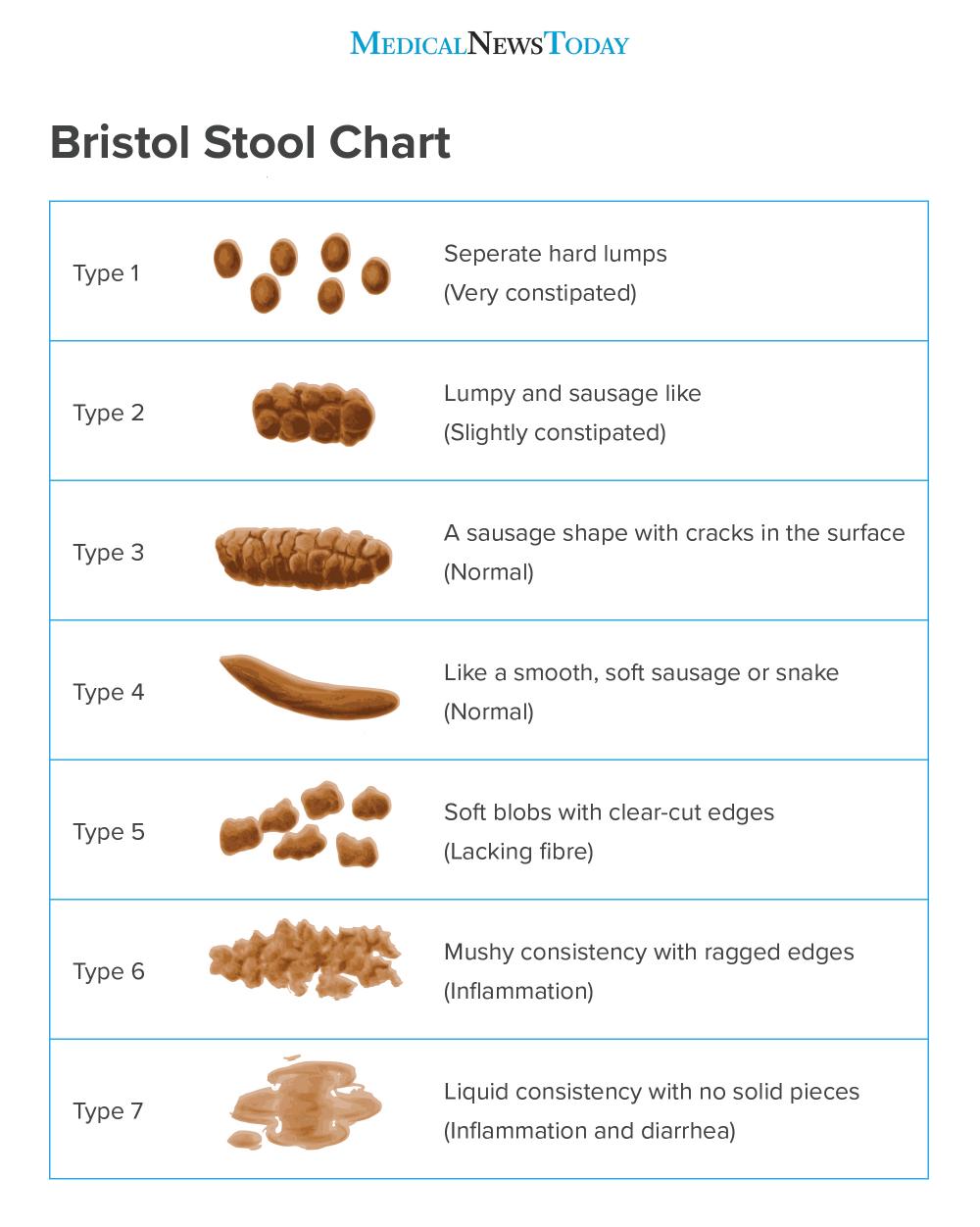
Where does it fit on the Bristol stool chart?

Ideally, you want a Type 4 stool, but a type 3 can happen frequently too.

If you find you are type 1 or 2, you need to read Coping with Constipation. if you have type 5 you may try adding a little extra fibre to your diet, for example with fresh fruit and vegetables or by switching your white bread, rice and pasta with brown alternatives. If however, your stools are type 6 or 7 regularly or over a period of time, you may wish to speak to doctor to figure out what the problem is. If you have type 7, you can look at my post about Dealing with Diarrhoea for tips.

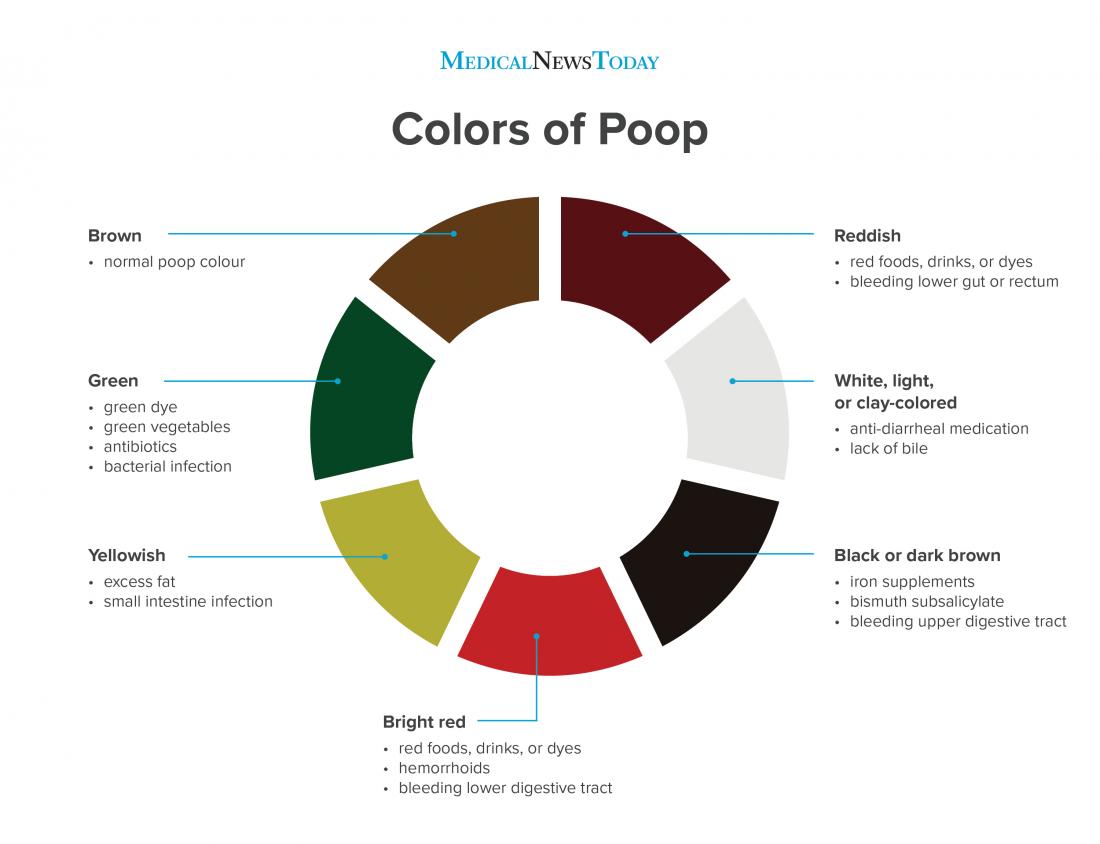
What colour is it?

Stool is most often brown, but sometimes people find that it is other colours. This can be an indication that something isn’t right. So, look below and see if any of the following could be the problem. Please make sure to record any out of character bowel movements and mention it to your doctor.

Are there any of the following?

Now, you’ve looked at the type and the colour. What about anything not mentioned so far?

Undigested food – Sometimes we see pieces of undigested food in our stool. One good example of this is corn. It may appear undigested because it has an outer coating of cellulose. A substance that humans can’t break down easily. Because of this some foods, especially plant-based foods that contain cellulose may appear undigested in our stools. If this happens from time-to-time, it’s no cause for concern. However, if you are finding that a lot of your food is being passed through undigested, it’s worth mentioning to your doctor.

Red blood – seeing a little blood in the stool could be due to various reasons, perhaps haemorrhoids, or a damaged anus. Or it could be bleeding from the lower digestive tract. If this hasn’t happened before, or is a lot of blood or is happening on a regular basis, see a doctor to get checked out.

Mucus – our stool always has mucus in or on it, but often it’s such a small amount that it isn’t visible to us. However, if your bowel movement is accompanied by mucus, it could be a sign of constipation or of inflammation in the bowel. Mucus can vary in colour and appear clear, yellow or even white and can look stringy. Again, if this is happening on a regular basis, it’s important to discuss it with your doctor.

Remember if you have any change in bowel habits, report them to your doctor since they can be a sign of an underlying health issue. Don’t be embarrassed, doctors are trained to discuss bowel habits and reporting yours could change your life or even save your life!

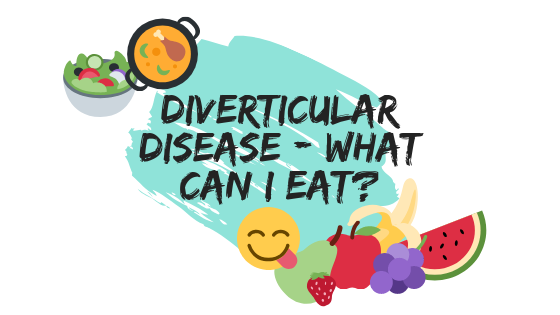
Diverticular Disease/Diverticulosis – What can I eat?

This article is for people wanting to know about foods to eat if they have diverticular disease/diverticulosis NOT diverticulitis. If you aren’t sure what the difference is or what you have, click here to find out.

One of the most common questions people have when they are diagnosed with Diverticular disease (DD) /Diverticulosis is ‘What can I eat?’. Unfortunately, there is no clear answer to this question. As an active member of various Facebook support groups, I see people all the time asking can I eat this or that. And the answer to the question is as follows.

There is no answer. Based on the latest medical research, there are no disallowed foods for diverticular disease/diverticulosis. This means, anything you ate before diagnosis, should be safe afterwards. Since you ate them just fine before you discovered the diverticula/pouches in the bowel. However, it is largely believed that eating a diet high in fibre is beneficial for those who have diverticular disease since it keeps the bowels moving and prevents stool causing the diverticula to become inflamed or infected. So perhaps upon discovering you have diverticular disease, you may choose to adopt a higher-fibre diet or a healthier one. This could include swapping white bread, rice and pasta for their healthier brown alternatives, eating more fresh fruit and veg or perhaps eating a high-fibre cereal for breakfast. However, there are cases where a high-fibre diet doesnt work out for various reasons and so, you may be advised to adopt a low-fibre diet instead.

Some doctors will advise their patients that they shouldn’t eat seeds, nuts, popcorn, sweetcorn, etc due to the chance of them being lodged in the diverticula/pouches. Although, current research shows this not to be the case. However, some people do have problems with these foods and if it makes you feel better to avoid them, then that’s fine, too.

A lot of discovering what you can eat, is about trial and error. Everyone is different. Many people with diverticular disease/diverticulosis also suffer with other digestive problems such as IBS that can cause symptoms in response to particular foods. So my advice is that if you are feeling unwell, you can try an elimination diet, or you can simply go day by day and keep track of your food intake by keeping a food diary. I’d recommend for those newly diagnosed especially, keeping track of your food and water intake, your symptoms and your bowel movements. You can do this easily using the Diverticular Disease/Diverticulosis Tracker which you can find here and download for free. It includes instructions for how to fill it out. You can even take your completed tracker pages to the doctor or nutritionist so that they can help you look at what foods may or may not work well with you and your needs.

Some advice I can give to ALL sufferers of Diverticular Disease/Divertiulosis is to drink LOTS of water. Two to three litres (4 – 6 pints/70-100 fl. oz) per day. This will help keep you hydrated, healthy and prevent constipation. Also chew your food well and avoid large portions. In fact, simply following my Tips for Good Digestion may help you avoid digestive discomfort.

Dealing with Diarrhoea

We all get diarrhoea (US: Diarrhea) from time to time. Diarrhoea can be for a variety of reasons; an upset stomach, a stomach bug, food poisoning, IBS, diverticulitis and other bowel diseases or even nerves and stress. Diarrhoea is also quite common in those who have had their gallbladder removed.

Diarrhoea happens because not enough water is absorbed in the bowel leaving your faeces too watery. In the case of an upset stomach, stomach bug or food poisoning, having diarrhoea is beneficial since it helps our body to get rid of the bacteria causing the problem.
I personally only try to stop diarrhoea in situations where I don’t have free or easy access to a bathroom, such as, at work, while travelling, out shopping, etc.

If you do have diarrhoea, here are some handy tips to help you deal with it effectively.

Stay hydrated

Drink lots of water. Staying hydrated is very important because our body needs water to work. If we become dehydrated, we are likely to feel even worse. For example, dehydration can cause dizziness, headaches, confusion and nausea. Drinking lots of water will replace that being lost when we have diarrhea and help our body to work efficiently.

Rehydration sachets

If you have bad diarrhoea, re-hydrating with water may not be enough since you also loose salts and electrolytes. For these occasions, you can use rehydration sachets, one well known brand is Dioralyte. This is mixed with water and available in different fruit flavours such as blackcurrant, strawberry and orange.

BRAT diet

Now, if you have diarrhoea due to a stomach bug or food poisoning, I wouldn’t recommend eating at all until the diarrhea has stopped. However, if you have diarrhoea because of IBS or gallbladder, you could try the BRAT diet. This is eating small portions of B – bananas, R – rice, A – applesauce and T – toast. The bananas are especially useful since they can replenish any potassium that the body has lost.

Anti-diarrhoea medication

Taking medication for diarrhoea is not recommended in all cases and shouldn’t be done regularly unless instructed to do so by a medical professional. For example, in the case of diverticulitis, some doctors warn their patients away from anti-diarrhoea medication because it

There are a number of medications that can help stop diarrhoea. One of the most common is loperamide hydrochloride (often sold in the UK under the brand name, Imodium). However, many supermarket and pharmacy chains sell their own version of this medicine, which is the same and often cheaper.

Complications and when to seek help

You can click here for advice on diarrhoea and vomiting or here to see guidelines for when you should consider visiting your doctor.

NOTE: If you are diabetic, please take steps to ensure your blood sugar is well-controlled. You may want to speak to your diabetes nurse or consultant about what to do in this case.

Are these helpful tips? Do you do anything differently to deal with diarrhoea? Let us know in the comments.

Preparing for a colonoscopy

So, you’re going for a colonoscopy…don’t worry. It’s not as bad as you might think! A lot of people say that the preparation is worse than the procedure, so let’s look at how we can make it as smooth a ride as possible.

Two days before the colonoscopy

Reduce the amount of fibre in your diet and adopt a low residue/low fibre diet. Cut out fruit and vegetables and eat plain foods such as chicken without a sauce, white rice, white bread, and clear soups. This makes the preparation much easier on your body. Also eat lightly, try not to eat too much, have small portions and drink lots of water. You may feel quite hungry, but, this will certainly reduce the amount of toilet trips when you take your preparation agent.

Preparation dayOn the day before the colonoscopy

I prefer to book a morning appointment for my colonoscopy and not eat anything on the day before my colonoscopy. However, if you have booked a later afternoon or evening appointment, your doctor should give you a schedule for when to take your preparation agent and stop eating and stick to a clear liquid diet.

NOTE: You MUST tell the colonoscopy team or your doctor before doing the preparation if you are diabetic.

When I had my colonoscopy, my doctor gave me Citrafleet to use. It was in two sachets each of which were to be mixed in one glass of water. The Citrafleet tasted like lemon and was definitely fine to drink without too much trouble.

The preparation agent my doctor prescribed for me.

Some doctors give their patients different preparation agents, these can come in large bottles, sachets and some are difficult to drink. Tips for making these drinks more palatable include: keeping it cool, using a straw, adding a flavour or chasing it with a clear drink you enjoy.

REMEMBER: Avoid eating or drinking anything that is red, pink or purple in colour. This can stain the lining of the bowel and can affect the results of the colonoscopy.

Prep day kit!

  • prep agent
  • drinks – I had green tea, water, iced tea, Sprite
  • Vaseline
  • baby wipes
  • A show or set of movies that you know well and love to watch.
  • Someone to hang out with
  • hobby (crochet, reading, etc)
  • paint your nails, do a face mask, do your hair, etc.

The urge to go can be sudden and come from nowhere…be ready to spring up and run to the bathroom! Be careful of cables, yarn, being in a position or chair you find it difficult to get out of. Make sure your route to the bathroom remains clear. And that other family members or friends if possible can use a different bathroom if you’ve got your stuff set up in the most convenient one.

Ouch it burns!

Like with any time we get diarrhea, it can burn. So, to solve this, be proactive. Before you go for the first time, apply Vaseline or Sudocrem thickly. This will act as somewhat of a barrier and will protect your skin. Then after going to the bathroom, avoid wiping multiple times with toilet paper. If you suspect it is messy, consider using a bidet or using water to clean your bottom. Alternatively, I would recommend using baby wipes for sensitive skin. These can help you clean up without too much repeated wiping and are gentle on the skin. (the more you wipe over the same area, the more likely it is to become sore). When you’re clean, apply a new thick layer of Vaseline or Sudocrem ready to protect you the next time. This helped me so much!

NOTE: We love the environment so please don’t flush your baby wipes away. Of course it would be better not to use them at all, but it’s better to dispose of them in a bin rather than flushing them down the toilet where they can block drains or enter our waterways.

How do I know whether I’m empty and ready for the procedure?

In theory, by the end of the preparation, your bowel movements should be totally liquid, pretty much see-through and possibly yellow in colour.
If you are still passing loose stool with pieces in it or thick and not at all see-through, you should contact your doctor or a member of staff at the place where the colonoscopy is taking place.
Some places will do an enema if the bowel requires a little cleaning, but others would rather reschedule the colonoscopy and prescribe a different preparation agent.

Good luck for the procedure!

If you have any more questions about preparing for a colonoscopy, please ask them in the comments below and I’ll try to answer them or even add additional information to the blog post. How did your colonoscopy prep go and do you have any helpful tips?

5 Ways to reduce nausea

It is quite common for people with digestive problems to suffer with nausea. This can be because of food choices, poor eating habits, stress, gastritis, medication or could even be unexplained. If this isn’t something you suffer with frequently, you don’t need to worry because everyone feels nauseous from time-to-time. However, if you are feeling nauseous on a regular basis, you should mention it to your GP/PCP or gastroenterologist.

Nausea isn’t always followed by vomiting and there are things you can do to reduce nausea without relying on drugs.

  1. Drink water – Drinking a little water can help to settle your stomach, but take small slow sips and drink water from the cold tap rather than chilled water from the refrigerator.
  2. Take your mind off it – Thinking about how you feel sick can make you feel even worse. Try to take deep breaths and think about something else. For example, put on a TV show or a movie that you enjoy.
  3. Try some ginger – sipping on ginger tea, eating a ginger biscuit or chewing on a little crystallized ginger can really help to reduce nausea. You could also try sipping ginger ale – but again, slowly and small sips.
  4. Get some fresh air – Go and sit in the garden or on the balcony, or even open a window or door
  5. Sniff a perfume – put a spray of fragrance on a wrist and sniff it. Avoid food smells and stick to fragrances you enjoy. Having a little sniff of your wrist can help. If you don’t have a perfume or fragrance, an essential oil or even vapour rub can help alleviate nausea.

If none of the above work, then it’s time to consider a nausea medication. The best idea is to speak to your doctor or your local pharmacist about which product is the best for you!

Do you suffer with nausea? How do you cope with it? Let me know in the comments.

What to pack in your hospital bag

Maybe it’s just me, but after being in hospital a few times with diverticulitis and then from a gallbladder removal surgery, I like to make sure I always have a bag ready for the hospital. Usually, this bag lives under the bed, but sometimes it accompanies us in the back of the car on long journeys and trips. But, it makes me feel better knowing that everything I need is ready to grab and go should I end up in hospital. Below, I’ve included my list of things that I keep packed in my hospital bag.

My List

  • pyjamas/nightie
  • comfortable and easy to put on footwear (e.g. slippers/sliders/crocs/flip flops)
  • underwear
  • wet wipes
  • toothbrush/toothpaste
  • hairbrush and headbands/hair ties
  • lip balm
  • flannel/face wash cloth
  • travel soap/liquid soap/body wash
  • towel (not white)
  • pillow (not in a white pillow case)
  • chargers for any smartphones, tablets, e-readers
  • feminine hygiene/sanitary products
  • comfortable bra/bandeau bra

If course, if it is a planned visit, you can pack especially for your stay remembering to include any books/tablets/chargers/etc. medications.

If you don’t want to have a bag packed constantly, I’d recommend keeping a list of everything you’d like to have with you in the hospital so that if the worst happens, either you, a family member or a friend can see exactly what to pack for you – and do it relatively stress-free. You can keep the list stuck to the fridge or family notice board or even inside the bag or suitcase you would use to pack for the hospital so that it’s in there for when you need it.

What do you think of my hospital bag list? Is there anything else you always take with you? Let me know in the comments.

Diverticular Disease Tracker

Keeping your food, symptom and stool diary

Keeping a diary isn’t always easy, but…it can come in very handy, especially if you are still learning to manage a health condition. If you are someone that already keeps a daily diary or journal, it may be easy to add this information in to your entries. However, if you’re not someone used to keeping a diary, then you can find other ways to do it, for example, you can use the downloadable attachment here, and complete that each day before filing it away, or you can create your own version that applies more specifically for you. Not only will this help you identify trigger foods or patterns in your symptoms but it could also be a great tool to help your doctors monitor and manage your health.

NOTES:

Be honest! Write what you really ate and drank….snacks, junk and alcohol included…you need to see the whole picture, exactly as it is.

Take it to doctor’s appointments with you even if you don’t need to use it. You never know when the info could come in handy.

If you have a bullet journal, you can get really creative with this. I’ve given you guys a free downloadable and printable version of what I use. Now, unfortunately you do need to print it to get the best use out of it. I would recommend filing them each day in a binder to keep a continuous diary. How much additional information you record is totally up to you. However women may benefit also by tracking their menstrual cycle, too.

DD Tracker Printable

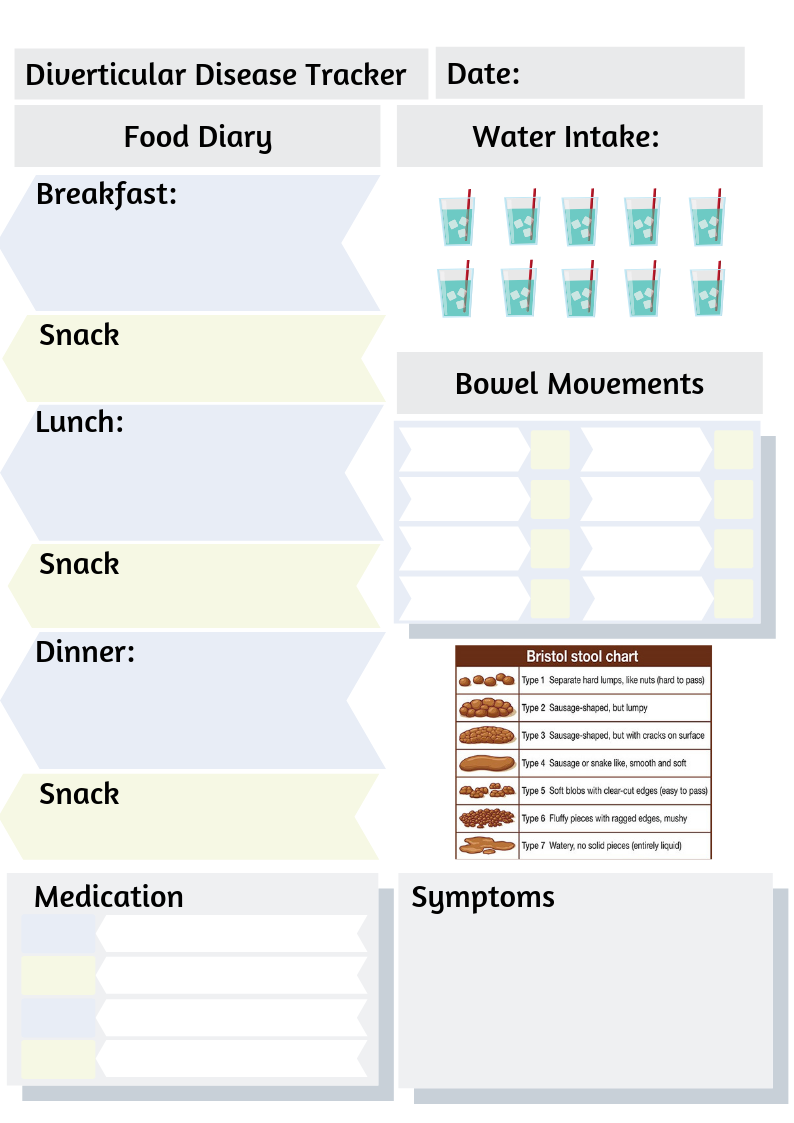
I’ve put together a little Diverticular Disease/Diverticulosis Tracker. You can use this to monitor what you eat, how you feel and even keep tabs on your bowel movements. I hope this proves to be helpful. The file even has it’s very own instructions that show you exactly how to use it. Just click on the download button below for FREE and you can print it out right away.
Support the creator and buy her a coffee by making a donation here: paypal.me/haylaki

Food Diary: The food sections allow space for you to write about what you ate and drank for the day.

Water Intake: You can cross out or tick the glass of water to show how much you drink each day.

Bowel Movements: The stool section provides boxes for you to keep a record of your bowel movements. There is space to write a time and or comment and a number that corresponds to the Bristol stool chart.

Symptoms/other notes: here you can mention any other feelings or symptoms you experience even if you feel they aren’t relevant. For example, headache, joint pain, nausea, delicate mood, etc. or even record that you took pain medication or anything that you don’t usually take. In addition, you could note anything else there you wish.

Medication: It’s always worth making a note of any medication you had to take, whether it seems related or not. But taking medication such as painkillers or antacids is a good way to keep a record of how often your symptoms bother you enough to reach for the medicine cupboard.

Tracker Previews

Preview of the DD Tracker
Instuctions and examples

Let me know what you think and even share with me what you record in your diary to help you…do you do anything differently?