How to survive the festive season with a digestive disorder

The festive season is one full of rich foods, alcohol, late nights, parties and sometimes stress and anxiety. It can be a tough time of year for those of us with digestive disorders because it can really put a dampener on your Christmas spirit. Below, I’m sharing my top tips for not only surviving Christmas and New Year, but also how to enjoy it and feel as well as you possibly can!

Plan ahead

Christmas Organiser – Cath Kidston – £20

Making plans and notes can really help you prepare for the festive season. Decide where you’ll be on Christmas day, who is cooking and if you’ll have guests. Getting all of these details sorted early can help reduce stress and anxiety which will help you feel as well as you can. You can keep a notebook for Christmas, make a checklist or even buy yourself a Christmas planner. This way, you’re sure not to forget anything at the supermarket or when gift shopping for friends and family.

Get plenty of rest

Getting rest at such a busy time of year is very important. The more well-rested you are, the more you’re likely to enjoy the festive season. Staying up late every night and accepting every single invitation you get to go out may not do you any good in the end. Listen to your body, if it tells you it needs a night off, take one. It will definitely thank you for it the next day. Don’t be afraid to politely decline an invitation, or make the decision to leave earlier than others if you’re not feeling up to it. The host will be glad that you showed up, even if you take off after an hour!

Eat well

Now, we all like to indulge at Christmas, but just make sure that you know your limits and that you still get your recommended daily amounts of vitamins, minerals, water and fibre.

Have foods that you don’t eat regularly in small portions and still avoid those that make you feel unwell at other times of the year. You can always let someone know in advance to serve you up a smaller portion or leave out the sprouts if they are going to make you feel poorly. Remember, no one wants you to feel unwell and so will be more than happy to leave items off your plate as requested. If you feel uncomfortable mentioning it at the party or table, just send your host a message beforehand so that they are aware. Indulging in large amounts or rich foods and alcohol is a risk and should be avoided as much as possible. It’s far better to just have a tiny bit and savour (US: savor) it!

Follow the tips for good digestion

As with any other time of the year, use the tips for good digestion to help yourself stay well. They may sound a little over the top, but I can assure you that following them will help your body digest the food you eat as best you can.
1. Eat small portions – large portions are not wise and can often leave sufferers feeling bloated and uncomfortable. It’s much better to eat a small portion and grab a little more in a few hours if you’re feeling hungry again.
2. Eat slowly – Take your time to eat your food. Don’t rush it all down and risk gulping down air when you eat. You’ll enjoy it much better if you take your time and you’ll have less chance of stomach ache and bloating later.

A good-sized bite is the size of a 50p coin…but not this one on the screen. Having a 50p coin next to you when you eat so may help you not bite off more than you can chew!


3. Take small bites – Having a lot of food in your mouth is not only hugely unattractive, but it also isn’t good for digestion. One bite should be around the same size as a 50 pence piece (UK). Any bigger than that, and you’ll make it difficult for the enzymes in your saliva to help you break it down, meaning it’s much tougher on the stomach.


4. Chew, chew, chew – Chew your food…REALLY well. We are supposed to chew around 22 times with eat bite, but you may not need to chew that many times, but your food should be almost like a paste before you swallow it. The teeth help to break down the food into small pieces so that the enzymes in your saliva can start to digest it before you even swallow. This makes digestion SO much easier in the stomach and reduces your chances of digestive discomfort, nausea and cramping.

Carry an emergency kit

Since we are out and about so much during the festive period, it’t a good idea to put together a little kit to carry with you. You could fit it into your bag or the car. This kit will contain everything you need to help you if you have any problems while you’re out of the house. Now, the contents of this kit can vary and be adjusted depending on where you’re going and what symptoms you experience, but I’ve just included a few suggestions below.

1 Wet wipes/moist toilet tissue – you never know when you’re going to need to do some extra cleaning after using the bathroom and disposable wipes are perfect for when you’re not at home and can’t use a bidet or jump in the shower. REMEMBER: Do NOT flush disposable wipes down the toilet…even if they say that they’re flushable. It’s much better to dispose of them in a bin instead. Also, yes, disposable wipes are not very good for the environment and I wouldn’t recommend using them all the time, but as part of an emergency kit, I think they are perfect. You can pick up very small packs which are very hand for popping in your bag.
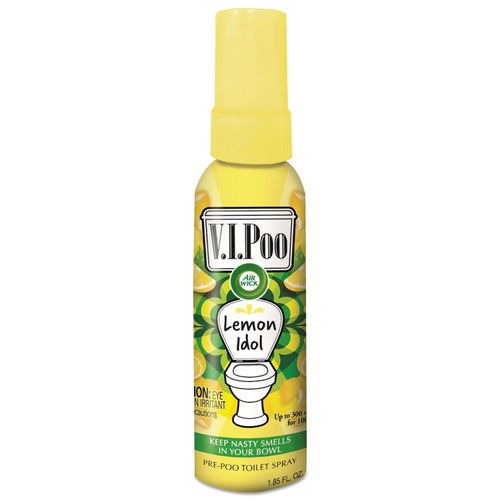
2. Scented toilet spray or drops – Whether it’s V.I.Poo or ‘Just one Drop’, scented toilet spray or drops can really mask a bad odour (US: odor) in the bathroom. Remember to read the instructions first as many products require you to use them BEFORE going to the bathroom. These are especially good when using a shared toilet or when you’re a guest in someone else’s home.

3. Spare underwear – Whether we like to admit it or not, lots of people with digestive disorders have accidents at some point. It may be that they stain their underwear after passing gas or that they struggle to make it to the bathroom in time. You may also want to carry a plastic zip-lock bag for any underwear that has been soiled and needs to be washed.

4. Medications – Make sure any of your medications are at hand. Perhaps you rely on Buscopan for cramping and pain, or maybe you use paracetamol. Remember NSAID painkillers such as Ibuprofen and aspirin are NOT usually recommended for people with digestive disorders. However, take your doctor’s advice for your specific case. Other medications may include antacids or Zantac (ranitidine) or similar medicines if you suffer from acid reflux or indigestion or Immodium (loperamide) if you suffer from diarrhoea (US: diarrhea). Although again, you should check with your doctor whether these medicines are recommended for you.

5. Soothing cream/ointment – If you suffer with a sore bottom because of diarrhoea or excess bile from gallbladder-related problems, you may wish to carry a tub of cream/ointment. Popular brand include Sudocrem or Vaseline. Remember, though, that these creams and ointments can stain your underwear or clothing because they tend to be quite oily/greasy and one solution is to wear a pantyliner or pad on the lining of your underwear to protect your clothing. Men can use these too, but they only really work well with mens’ Y-front style briefs rather than boxer shorts.

6. Nappy/sanitary bags – a few nappy/sanitary bags can help you dispose of soiled wipes or pads if you are using an open-top bin in the bathroom. They are often scented, too so can prevent soiled wipes from stinking up the bathroom if they end up sitting in the bin for some time.

7. A box of matches – if even despite using your odour blocking spray or drops, you’ve still caused a bit of a stink, you can use a couple of matches to burn away any unpleasant smells. Simply light a match and hold it while it burns down a little, then blow it out. You can repeat this with two or three matches if necessary. REMEMBER: Always extinguish your matches in water after use. You should use water to wet the matchsticks before disposing of them in the bin. Also, be careful when lighting matches in the bathroom to keep them away from fabrics and any flammable products such as aerosols and cleaning products.

What does your poo say about you?

A lot of people don’t like to talk toilet, but it’s a natural function of the human body. We all need to eliminate waste from our body and are doing so all the time. For example, we eliminate carbon dioxide by breathing it out, we eliminate broken down proteins and excess water by producing urine, and finally, we eliminate unwanted food and fibre by producing solid faeces (stools/poo/poop).

So, why should we pay attention to the waste we produce?
Because it can tell us a lot about the current state of our health.

There are different characteristics we can look for to judge a healthy bowel movement. Of course, the ideal bowel movement would be easy to pass (without straining or pain) and would be soft but formed and brown in colour. However, for people with stomach problems, we can see a lot of different characteristics so keep reading to find out what your poo could be saying about you.

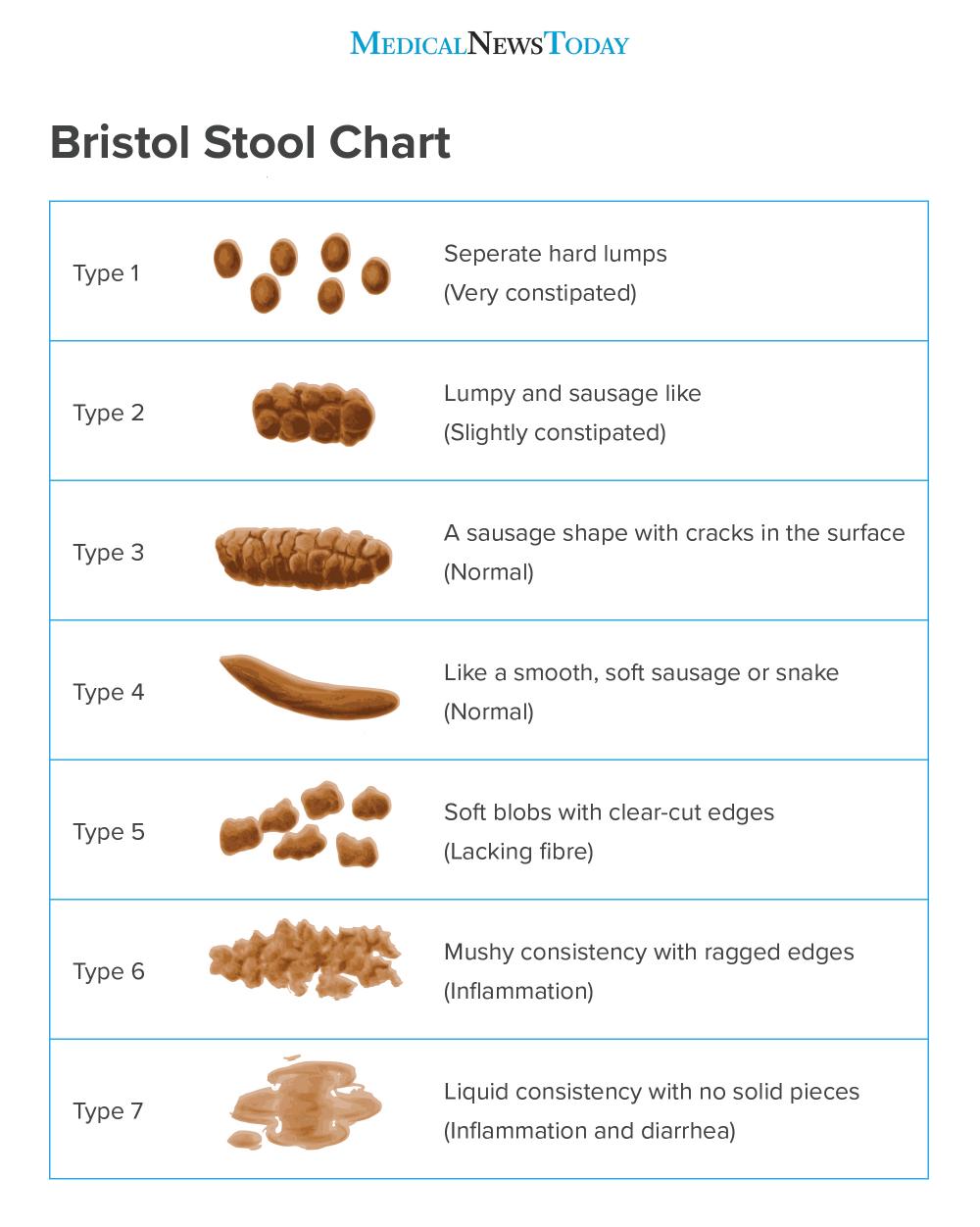
Where does it fit on the Bristol stool chart?

Ideally, you want a Type 4 stool, but a type 3 can happen frequently too.

If you find you are type 1 or 2, you need to read Coping with Constipation. if you have type 5 you may try adding a little extra fibre to your diet, for example with fresh fruit and vegetables or by switching your white bread, rice and pasta with brown alternatives. If however, your stools are type 6 or 7 regularly or over a period of time, you may wish to speak to doctor to figure out what the problem is. If you have type 7, you can look at my post about Dealing with Diarrhoea for tips.

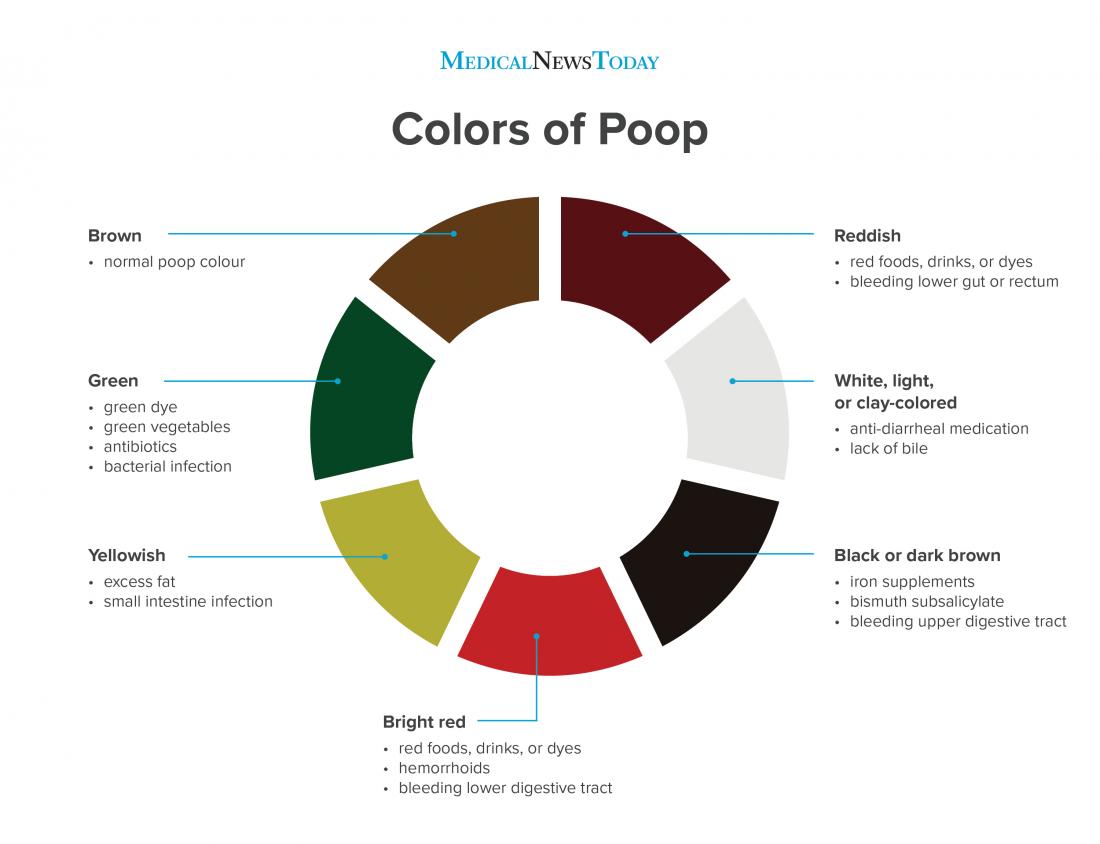
What colour is it?

Stool is most often brown, but sometimes people find that it is other colours. This can be an indication that something isn’t right. So, look below and see if any of the following could be the problem. Please make sure to record any out of character bowel movements and mention it to your doctor.

Are there any of the following?

Now, you’ve looked at the type and the colour. What about anything not mentioned so far?

Undigested food – Sometimes we see pieces of undigested food in our stool. One good example of this is corn. It may appear undigested because it has an outer coating of cellulose. A substance that humans can’t break down easily. Because of this some foods, especially plant-based foods that contain cellulose may appear undigested in our stools. If this happens from time-to-time, it’s no cause for concern. However, if you are finding that a lot of your food is being passed through undigested, it’s worth mentioning to your doctor.

Red blood – seeing a little blood in the stool could be due to various reasons, perhaps haemorrhoids, or a damaged anus. Or it could be bleeding from the lower digestive tract. If this hasn’t happened before, or is a lot of blood or is happening on a regular basis, see a doctor to get checked out.

Mucus – our stool always has mucus in or on it, but often it’s such a small amount that it isn’t visible to us. However, if your bowel movement is accompanied by mucus, it could be a sign of constipation or of inflammation in the bowel. Mucus can vary in colour and appear clear, yellow or even white and can look stringy. Again, if this is happening on a regular basis, it’s important to discuss it with your doctor.

Remember if you have any change in bowel habits, report them to your doctor since they can be a sign of an underlying health issue. Don’t be embarrassed, doctors are trained to discuss bowel habits and reporting yours could change your life or even save your life!

Traveller’s tummy

Traveller’s tummy or ‘Holiday tummy’ is something lots of people experience when they go on holiday. Some people get diarrhoea and others find they become constipated or experience nausea. Now, I have blog posts that deal with all three of these issues, but wanted to make a specific post about how to deal with this while on holiday. Whether this is because of the nerves from the flight, new food or water, we can’t be sure. Whatever the cause of your holiday tummy, there are some steps you can take to make sure you’re prepared for every scenario and can kick back and enjoy yourself.

Symptoms of ‘Traveller’s tummy’ can include:

However, if any of these symptoms are severe or do not improve at all within a couple of days, you should seek professional medical advice. You may be able to ask a pharmacist, or speak with a doctor or visit a clinic or hospital if necessary. Remember to take your travel insurance documents and your ID with you when visiting health centres. This will avoid large medical bills.

Drink lots of bottled water

Yes it is more costly and can contribute to plastic waste, but it is definitely the safest bet for something with a sensitive stomach. I opt for bottled water even in regions where I’m assured the tap water is safe to drink. Even just a slight change in mineral content or fluoridation can upset a sensitive stomach and have you heading for the toilet more frequently than you would like. Just be sure to recycle your plastic bottles when you’re done!

Avoiding the local water can be difficult, remember that fruits and salads may be washed in tap water and that the ice cubes used in your drinks may be made from tap water. You can easily ask for drinks with no ice, or if the ice comes from bottled water. You may even wish to use bottled water, to brush your teeth!

Eat sensibly

While I’m sure there are lots of delicious foods to try on your holiday, being cautious while you are experiencing any diarrhoea or stomach problems is a good idea. You can stick to plain foods such as white bread or white rice. Avoid spices and heavily-flavoured foods while your stomach is still unsettled.

After a day or two, your stomach is likely to be a little better and you can be a little more adventurous when sampling the local culinary delights.

Anti-Diarrhoea medication

Anti-diarrhoea medication is very useful to take on holiday with you, but beware, it isn’t recommended for everyone. Those with a stomach bug, food poisoning and diverticular disease/diverticulosis should not take anti-diarrhoea medication unless instructed to by a medical professional. If you’re not sure whether you should be taking it, speak to your doctor or pharmacist before your trip.

Stool softeners

Should you get constipated and find it difficult to eliminate stool, you should try a stool softener. These are often taken in the evening so that they work overnight, meaning by the morning, you are able to have a bowel movement. Common stool softeners include lactulose, milk of magnesia and ;axatives such as Dulcolax or Senna.

However, if you don’t fancy trying medication, up your water and fibre (US: fiber) intake and try get some gentle exercise to get the bowel moving again. You can also eat prunes, figs, Weetabix, licorice and drink prune juice or black coffee. You can also read my post about constipation if you need more information.

Rehydration sachets

As I mentioned in my post about diarrhoea, re-hydration sachets can be extremely helpful when recovering from diarrhoea and re-hydrating your body. During this time, you should definitely avoid alcohol since that can cause further dehydration. This is especially important when visiting a destination with a hotter climate and swimming in the sea.

Have you experienced traveller’s tummy before? How did you deal with it?

Dealing with Diarrhoea

We all get diarrhoea (US: Diarrhea) from time to time. Diarrhoea can be for a variety of reasons; an upset stomach, a stomach bug, food poisoning, IBS, diverticulitis and other bowel diseases or even nerves and stress. Diarrhoea is also quite common in those who have had their gallbladder removed.

Diarrhoea happens because not enough water is absorbed in the bowel leaving your faeces too watery. In the case of an upset stomach, stomach bug or food poisoning, having diarrhoea is beneficial since it helps our body to get rid of the bacteria causing the problem.
I personally only try to stop diarrhoea in situations where I don’t have free or easy access to a bathroom, such as, at work, while travelling, out shopping, etc.

If you do have diarrhoea, here are some handy tips to help you deal with it effectively.

Stay hydrated

Drink lots of water. Staying hydrated is very important because our body needs water to work. If we become dehydrated, we are likely to feel even worse. For example, dehydration can cause dizziness, headaches, confusion and nausea. Drinking lots of water will replace that being lost when we have diarrhea and help our body to work efficiently.

Rehydration sachets

If you have bad diarrhoea, re-hydrating with water may not be enough since you also loose salts and electrolytes. For these occasions, you can use rehydration sachets, one well known brand is Dioralyte. This is mixed with water and available in different fruit flavours such as blackcurrant, strawberry and orange.

BRAT diet

Now, if you have diarrhoea due to a stomach bug or food poisoning, I wouldn’t recommend eating at all until the diarrhea has stopped. However, if you have diarrhoea because of IBS or gallbladder, you could try the BRAT diet. This is eating small portions of B – bananas, R – rice, A – applesauce and T – toast. The bananas are especially useful since they can replenish any potassium that the body has lost.

Anti-diarrhoea medication

Taking medication for diarrhoea is not recommended in all cases and shouldn’t be done regularly unless instructed to do so by a medical professional. For example, in the case of diverticulitis, some doctors warn their patients away from anti-diarrhoea medication because it

There are a number of medications that can help stop diarrhoea. One of the most common is loperamide hydrochloride (often sold in the UK under the brand name, Imodium). However, many supermarket and pharmacy chains sell their own version of this medicine, which is the same and often cheaper.

Complications and when to seek help

You can click here for advice on diarrhoea and vomiting or here to see guidelines for when you should consider visiting your doctor.

NOTE: If you are diabetic, please take steps to ensure your blood sugar is well-controlled. You may want to speak to your diabetes nurse or consultant about what to do in this case.

Are these helpful tips? Do you do anything differently to deal with diarrhoea? Let us know in the comments.