
Is there a difference between diverticular disease/ diverticulosis and diverticulitis?
Yes, quite an important one, too and here’s what it is…
DIVERTICULAR DISEASE/DIVERTICULOSIS
The condition of having diverticula or ‘pouches’ along the wall of the large intestine.

This disease is thought by most medical professionals to be symptom-free. However, lots of Diverticular disease (DD)/Diverticulosis sufferers will tell you differently. The truth, really is that it’s not a condition that is very well known and the symptoms of it appear difficult to record and monitor since they vary so much from person to person and can be confused with other digestive tract problems such as IBS.
Generally, it is thought that those who have a diet lacking in fibre or who live an unhealthy lifestyle are more likely to develop diverticula in their bowel over time. However, there are suggestions involving a genetic predisposition to develop them, too.
DIVERTICULITIS
When one or more diverticula becomes infected and/or inflamed.
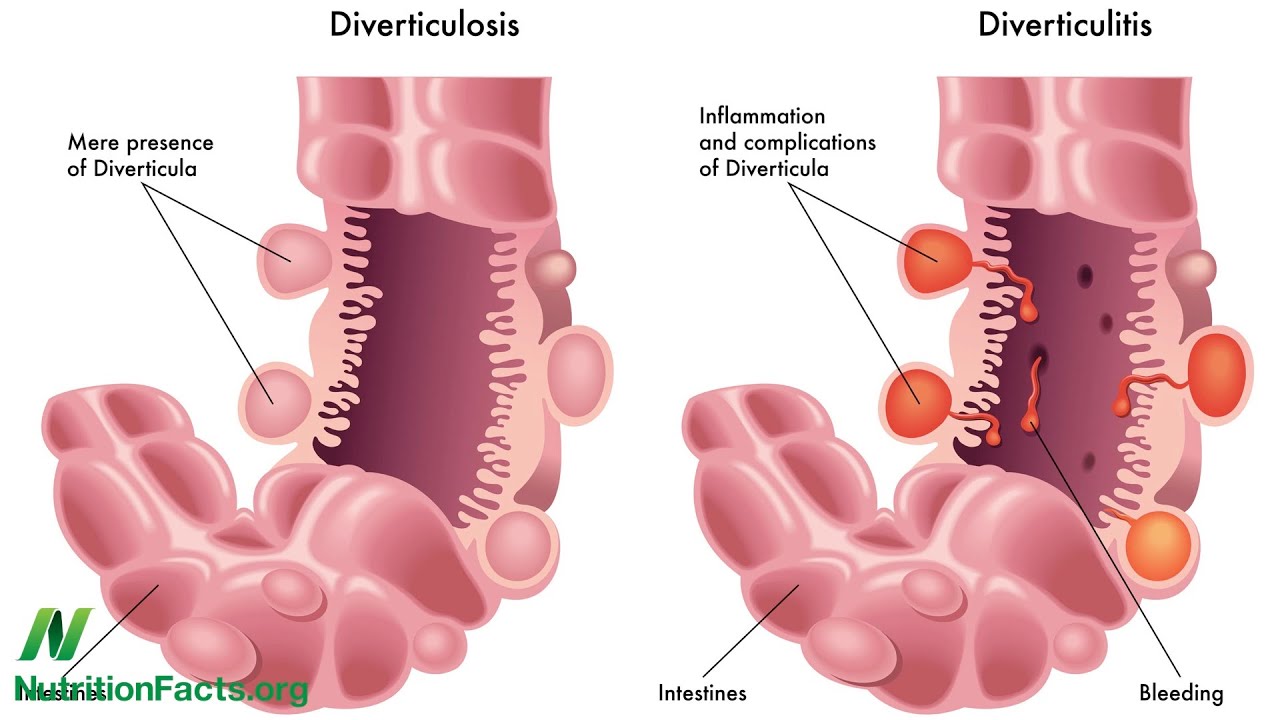
A lot of medical terms or parts of them come from either Greek or latin origins and diverticulitis is an example of this. The –itis suffix comes from greek and means inflammation or infection. We see this with lots of other words too, for example, tonsillitis, arthritis, etc.
Diverticulitis is an infection or inflammation of one or more diverticula in the bowel. The reason for diverticulitis is not well understood, but it is thought that living a healthy lifestyle and keeping stress to a minimum can reduce the likelihood of it taking place. However, there is no guaranteed magical fix-it that will work to keep you free of infection. It is often detected by the use of blood tests and CT scans. However, some doctors use X-rays as a fast way to check for perforations of the bowel, too.
Diverticulitis can vary from being mild to severe with complications. For the very mildest episodes a clear liquid and low residue diet will help you get through. However, for other cases antibiotics may be required or even in some cases hospitalisation and even surgery.
It’s worth mentioning that the overwhelming majority of those with diverticular disease/diverticulosis never get diverticulitis! And, out of those who do get it, only a few get repeated episodes and/or surgery.
So, remember, the diverticular disease/diverticulosis is the presence of diverticula or pouches in the intestine whereas diverticulitis is an infection or inflammation of one or more diverticula. It’s important to know whether a diagnosis of diverticular disease/diverticulosis or diverticulitis is given to know how best to deal with it is.
Do you have Diverticular Disease/Diverticulosis? Have you ever had diverticulitis?
 Tummy Trouble