Diverticular Disease/Diverticulosis – What can I eat?

This article is for people wanting to know about foods to eat if they have diverticular disease/diverticulosis NOT diverticulitis. If you aren’t sure what the difference is or what you have, click here to find out.

One of the most common questions people have when they are diagnosed with Diverticular disease (DD) /Diverticulosis is ‘What can I eat?’. Unfortunately, there is no clear answer to this question. As an active member of various Facebook support groups, I see people all the time asking can I eat this or that. And the answer to the question is as follows.

There is no answer. Based on the latest medical research, there are no disallowed foods for diverticular disease/diverticulosis. This means, anything you ate before diagnosis, should be safe afterwards. Since you ate them just fine before you discovered the diverticula/pouches in the bowel. However, it is largely believed that eating a diet high in fibre is beneficial for those who have diverticular disease since it keeps the bowels moving and prevents stool causing the diverticula to become inflamed or infected. So perhaps upon discovering you have diverticular disease, you may choose to adopt a higher-fibre diet or a healthier one. This could include swapping white bread, rice and pasta for their healthier brown alternatives, eating more fresh fruit and veg or perhaps eating a high-fibre cereal for breakfast. However, there are cases where a high-fibre diet doesnt work out for various reasons and so, you may be advised to adopt a low-fibre diet instead.

Some doctors will advise their patients that they shouldn’t eat seeds, nuts, popcorn, sweetcorn, etc due to the chance of them being lodged in the diverticula/pouches. Although, current research shows this not to be the case. However, some people do have problems with these foods and if it makes you feel better to avoid them, then that’s fine, too.

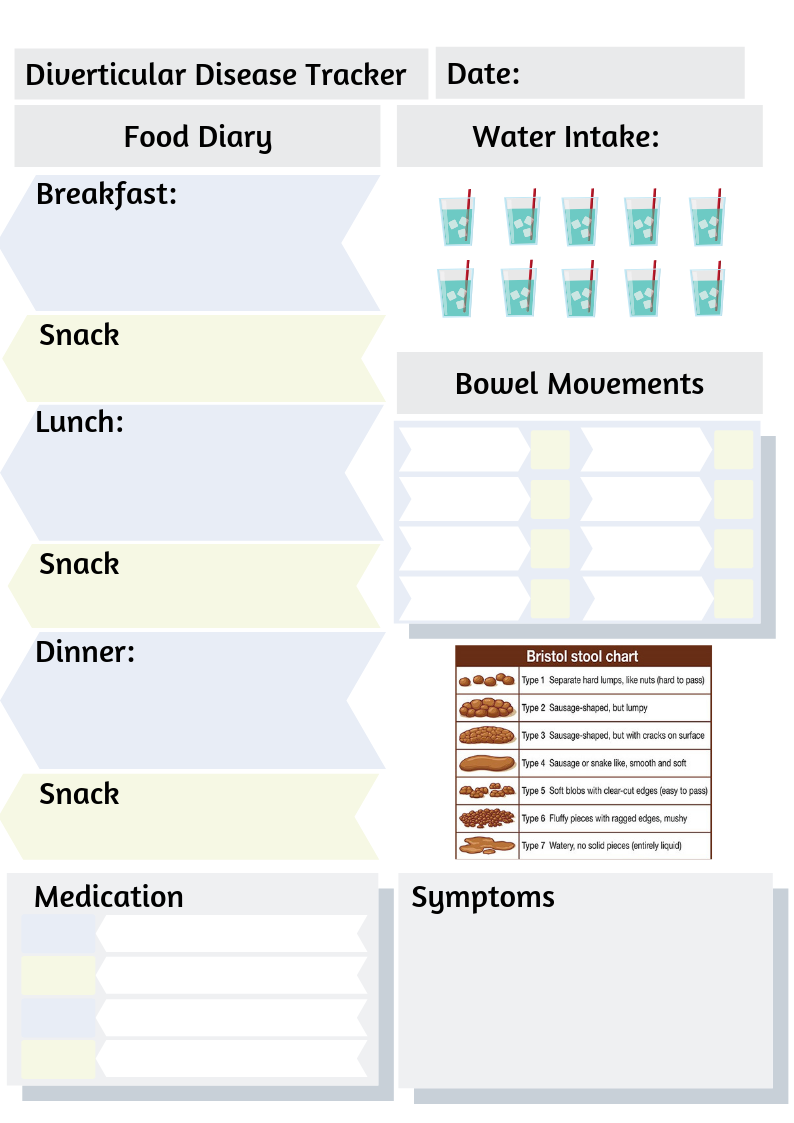
A lot of discovering what you can eat, is about trial and error. Everyone is different. Many people with diverticular disease/diverticulosis also suffer with other digestive problems such as IBS that can cause symptoms in response to particular foods. So my advice is that if you are feeling unwell, you can try an elimination diet, or you can simply go day by day and keep track of your food intake by keeping a food diary. I’d recommend for those newly diagnosed especially, keeping track of your food and water intake, your symptoms and your bowel movements. You can do this easily using the Diverticular Disease/Diverticulosis Tracker which you can find here and download for free. It includes instructions for how to fill it out. You can even take your completed tracker pages to the doctor or nutritionist so that they can help you look at what foods may or may not work well with you and your needs.
Some advice I can give to ALL sufferers of Diverticular Disease/Divertiulosis is to drink LOTS of water. Two to three litres (4 – 6 pints/70-100 fl. oz) per day. This will help keep you hydrated, healthy and prevent constipation. Also chew your food well and avoid large portions. In fact, simply following my Tips for Good Digestion may help you avoid digestive discomfort.

How to deal with a diverticulitis flare up

If you’ve got diverticular disease (DD)/Diverticulosis, you may be unlucky enough to experience diverticulitis. Don’t know the difference? Check out my post on Diverticular Disease/Diverticulosis Vs Diverticulitis. Diverticulitis is an inflammation or infection of one or more of the diverticula (pouches) in your bowel. Diverticulitis can vary in severity and can go from being a mild flare up, to an infection so severe that it can carry life-threatening complications. So, what can you do if you suspect you may be getting a flare up?

For a start, symptoms of a flare up can include:

  • abdominal pain/discomfort
  • high temperature/fever
  • painful bowel movements
  • generally feeling poorly (nausea, headache, stomachache)
  • diarrhoea/constipation
  • loss of appetite
  • Change to stools (excessive mucus, blood, huge change is regularity or stool type)

If you are experiencing some of the symptoms above, it’s a good idea to prepare for a flare up by doing the following things:

DO:

  • drink lots of water – 2-3 litres a day will help flush your system and keep you hydrated. It may also help relieve constipation.
  • Try a clear liquid diet – eliminating solid foods and dairy from your diet for a day is the best way to rest the bowel and give time for the inflammation to go down on its own.
  • Keep track of your temperature – on a notepad, note down your temperature every couple of hours so you can monitor any changes. Please note that diverticulitis does NOT always cause high temperature/fever.
  • Rest – Take time to relax and rest as well as removing yourself as best you can from stressful situations. Sometimes a duvet day and a few extra hours sleep can help the body heal.
  • Listen to your body – Remember that our body usually knows what is best for it. For example, if you’re tired and want to sleep, do it. If you have no appetite, don’t eat just because it’s dinner time and someone has said you ‘should eat something’.
  • Take paracetamol-based pain killers to relieve the pain if necessary. This include brands such as Panadol in the UK or Tylenol in the US.
  • Track your day using a Diverticular Disease tracker.
  • Seek advice from a medical professional – If you are in a lot of pain, have a very high temperature or feel very unwell, it’s a good idea to seek medical advice from a professional. This may include booking an appointment with your GP/PCP, Gastroenterologist/GI doctor or even visiting the local A&E/ER.

If you suspect you may be experiencing a flare up, there are a few things you should avoid doing in order to not make things worse.

DON’T:

  • eat high-fibre foods – If you suspect a flare up, it’s best to go for a clear liquid diet, but if you want to try solid food, you should stick to low-fibre/low residue foods such as white bread, chicken breast, white pasta or rice.
  • Take NSAIDs without approval from a medical professional – NSAIDs are not recommended for people with diverticular disease because they can increase the chance of bleeding from the diverticula or increase the risk of perforation.
  • Take Codeine-based painkillers without approval from a medical professional – codeine is known for causing constipation and so can worsen the infection if stools are not passed through the bowel.
  • Eat large portions – if you decide to eat, stick to small portions that won’t overwhelm the system.
  • Take anti-diarrhoea medication without approval from a medical professional – stopping diarrhoea can be a bad thing since you may be keeping infected waste inside your bowel and allowing the infection to become more severe.

These tips and tricks may be able to help you rest the bowel before medical treatment is required. However, if your symptoms become worse or do not subside, it’s important to seek advice from a medical professional.

If it turns out antibiotics are required, there are a number of things you could be prescribed. For example, common antibiotics include: Ciproxin, Flagyl (metro), Co-amoxiclav, Augmentin and several others. However, Ciproxin and Flagyl are the ones most suitable for those with a penicillin allergy. Please note that some of these antibiotics have some significant side-effects and you should make yourself aware of these by reading the leaflet or discussing it with your doctor before you take them.

In a more severe situation, you may even be admitted to hospital to receive treatment for diverticulitis. Here, they will usually give you antibiotics, fluids and pain relief intravenously. You can read about what I like to pack in my hospital bag here.

What symptoms do you experience before a flare up? Have you managed to treat a flare up without antibiotics? How did you do it?


Support the author and buy her a coffee by making a donation here: paypal.me/haylaki

Diverticular Disease/ Diverticulosis Vs Diverticulitis

Is there a difference between diverticular disease/ diverticulosis and diverticulitis?

Yes, quite an important one, too and here’s what it is…

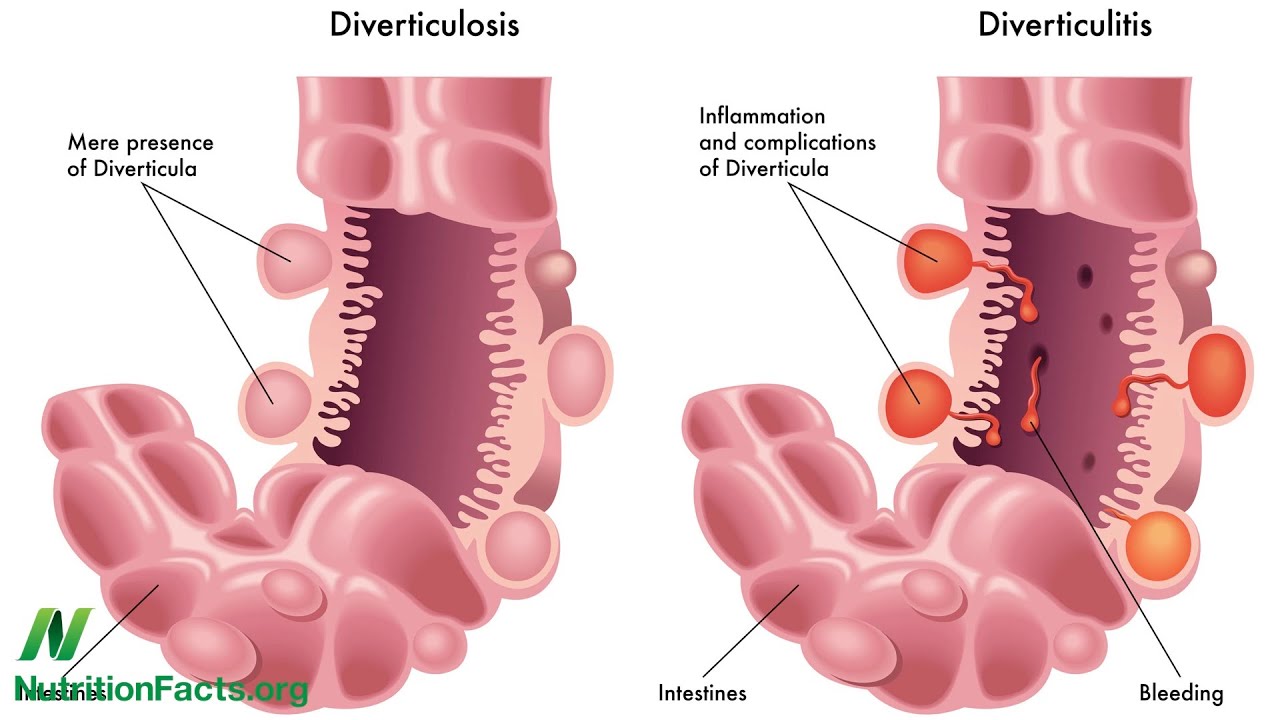
DIVERTICULAR DISEASE/DIVERTICULOSIS

The condition of having diverticula or ‘pouches’ along the wall of the large intestine.

This disease is thought by most medical professionals to be symptom-free. However, lots of Diverticular disease (DD)/Diverticulosis sufferers will tell you differently. The truth, really is that it’s not a condition that is very well known and the symptoms of it appear difficult to record and monitor since they vary so much from person to person and can be confused with other digestive tract problems such as IBS.

Generally, it is thought that those who have a diet lacking in fibre or who live an unhealthy lifestyle are more likely to develop diverticula in their bowel over time. However, there are suggestions involving a genetic predisposition to develop them, too.

DIVERTICULITIS

When one or more diverticula becomes infected and/or inflamed.

A lot of medical terms or parts of them come from either Greek or latin origins and diverticulitis is an example of this. The –itis suffix comes from greek and means inflammation or infection. We see this with lots of other words too, for example, tonsillitis, arthritis, etc.

Diverticulitis is an infection or inflammation of one or more diverticula in the bowel. The reason for diverticulitis is not well understood, but it is thought that living a healthy lifestyle and keeping stress to a minimum can reduce the likelihood of it taking place. However, there is no guaranteed magical fix-it that will work to keep you free of infection. It is often detected by the use of blood tests and CT scans. However, some doctors use X-rays as a fast way to check for perforations of the bowel, too.

Diverticulitis can vary from being mild to severe with complications. For the very mildest episodes a clear liquid and low residue diet will help you get through. However, for other cases antibiotics may be required or even in some cases hospitalisation and even surgery.

It’s worth mentioning that the overwhelming majority of those with diverticular disease/diverticulosis never get diverticulitis! And, out of those who do get it, only a few get repeated episodes and/or surgery.

So, remember, the diverticular disease/diverticulosis is the presence of diverticula or pouches in the intestine whereas diverticulitis is an infection or inflammation of one or more diverticula. It’s important to know whether a diagnosis of diverticular disease/diverticulosis or diverticulitis is given to know how best to deal with it is.  

Do you have Diverticular Disease/Diverticulosis? Have you ever had diverticulitis?

Traveller’s tummy

Traveller’s tummy or ‘Holiday tummy’ is something lots of people experience when they go on holiday. Some people get diarrhoea and others find they become constipated or experience nausea. Now, I have blog posts that deal with all three of these issues, but wanted to make a specific post about how to deal with this while on holiday. Whether this is because of the nerves from the flight, new food or water, we can’t be sure. Whatever the cause of your holiday tummy, there are some steps you can take to make sure you’re prepared for every scenario and can kick back and enjoy yourself.

Symptoms of ‘Traveller’s tummy’ can include:

However, if any of these symptoms are severe or do not improve at all within a couple of days, you should seek professional medical advice. You may be able to ask a pharmacist, or speak with a doctor or visit a clinic or hospital if necessary. Remember to take your travel insurance documents and your ID with you when visiting health centres. This will avoid large medical bills.

Drink lots of bottled water

Yes it is more costly and can contribute to plastic waste, but it is definitely the safest bet for something with a sensitive stomach. I opt for bottled water even in regions where I’m assured the tap water is safe to drink. Even just a slight change in mineral content or fluoridation can upset a sensitive stomach and have you heading for the toilet more frequently than you would like. Just be sure to recycle your plastic bottles when you’re done!

Avoiding the local water can be difficult, remember that fruits and salads may be washed in tap water and that the ice cubes used in your drinks may be made from tap water. You can easily ask for drinks with no ice, or if the ice comes from bottled water. You may even wish to use bottled water, to brush your teeth!

Eat sensibly

While I’m sure there are lots of delicious foods to try on your holiday, being cautious while you are experiencing any diarrhoea or stomach problems is a good idea. You can stick to plain foods such as white bread or white rice. Avoid spices and heavily-flavoured foods while your stomach is still unsettled.

After a day or two, your stomach is likely to be a little better and you can be a little more adventurous when sampling the local culinary delights.

Anti-Diarrhoea medication

Anti-diarrhoea medication is very useful to take on holiday with you, but beware, it isn’t recommended for everyone. Those with a stomach bug, food poisoning and diverticular disease/diverticulosis should not take anti-diarrhoea medication unless instructed to by a medical professional. If you’re not sure whether you should be taking it, speak to your doctor or pharmacist before your trip.

Stool softeners

Should you get constipated and find it difficult to eliminate stool, you should try a stool softener. These are often taken in the evening so that they work overnight, meaning by the morning, you are able to have a bowel movement. Common stool softeners include lactulose, milk of magnesia and ;axatives such as Dulcolax or Senna.

However, if you don’t fancy trying medication, up your water and fibre (US: fiber) intake and try get some gentle exercise to get the bowel moving again. You can also eat prunes, figs, Weetabix, licorice and drink prune juice or black coffee. You can also read my post about constipation if you need more information.

Rehydration sachets

As I mentioned in my post about diarrhoea, re-hydration sachets can be extremely helpful when recovering from diarrhoea and re-hydrating your body. During this time, you should definitely avoid alcohol since that can cause further dehydration. This is especially important when visiting a destination with a hotter climate and swimming in the sea.

Have you experienced traveller’s tummy before? How did you deal with it?

Dealing with Diarrhoea

We all get diarrhoea (US: Diarrhea) from time to time. Diarrhoea can be for a variety of reasons; an upset stomach, a stomach bug, food poisoning, IBS, diverticulitis and other bowel diseases or even nerves and stress. Diarrhoea is also quite common in those who have had their gallbladder removed.

Diarrhoea happens because not enough water is absorbed in the bowel leaving your faeces too watery. In the case of an upset stomach, stomach bug or food poisoning, having diarrhoea is beneficial since it helps our body to get rid of the bacteria causing the problem.
I personally only try to stop diarrhoea in situations where I don’t have free or easy access to a bathroom, such as, at work, while travelling, out shopping, etc.

If you do have diarrhoea, here are some handy tips to help you deal with it effectively.

Stay hydrated

Drink lots of water. Staying hydrated is very important because our body needs water to work. If we become dehydrated, we are likely to feel even worse. For example, dehydration can cause dizziness, headaches, confusion and nausea. Drinking lots of water will replace that being lost when we have diarrhea and help our body to work efficiently.

Rehydration sachets

If you have bad diarrhoea, re-hydrating with water may not be enough since you also loose salts and electrolytes. For these occasions, you can use rehydration sachets, one well known brand is Dioralyte. This is mixed with water and available in different fruit flavours such as blackcurrant, strawberry and orange.

BRAT diet

Now, if you have diarrhoea due to a stomach bug or food poisoning, I wouldn’t recommend eating at all until the diarrhea has stopped. However, if you have diarrhoea because of IBS or gallbladder, you could try the BRAT diet. This is eating small portions of B – bananas, R – rice, A – applesauce and T – toast. The bananas are especially useful since they can replenish any potassium that the body has lost.

Anti-diarrhoea medication

Taking medication for diarrhoea is not recommended in all cases and shouldn’t be done regularly unless instructed to do so by a medical professional. For example, in the case of diverticulitis, some doctors warn their patients away from anti-diarrhoea medication because it

There are a number of medications that can help stop diarrhoea. One of the most common is loperamide hydrochloride (often sold in the UK under the brand name, Imodium). However, many supermarket and pharmacy chains sell their own version of this medicine, which is the same and often cheaper.

Complications and when to seek help

You can click here for advice on diarrhoea and vomiting or here to see guidelines for when you should consider visiting your doctor.

NOTE: If you are diabetic, please take steps to ensure your blood sugar is well-controlled. You may want to speak to your diabetes nurse or consultant about what to do in this case.

Are these helpful tips? Do you do anything differently to deal with diarrhoea? Let us know in the comments.

Coping with constipation

Getting constipated is something that happens to everyone from time to time and there are many different reasons for why we get constipated. These could include, stress, holding off going to the toilet, a diet lacking fibre, a bowel complaint such as irritable bowel syndrome, poor gut motility, surgery, certain medications including pain killers such as codeine, etc, dehydration or even a sedentary lifestyle.

Whatever reason you are dealing with constipation, here are some helpful ways to deal with it.

Drink plenty of water

The job of the large intestine/bowel is to absorb water from our waste back into our body so that we don’t become dehydrated. However, if we don’t drink enough water, this can make our faeces (US: feces) too dried out and hard, meaning that it doesn’t move as easily in the bowel and is hard to eliminate.
Drinking lots of water will keep you hydrated and mean that not too much water is absorbed from the faeces in the large intestine, keeping your bowel movements smooth and soft.

Exercise

Staying active is very important. The body needs to get up and move in order for the muscles to be exercised well and to work properly. This includes your intestines. Spending too much time being inactive can make it more difficult for the bowel to work effectively.
Gentle exercise each day can really help to keep you regular. For example, a small walk to the shop, going up and down the stairs, or even doing some gardening or housework are all good ways of keeping your body moving.

Prune juice, raisins and figs

When a lot of people are constipated, the first things people recommend are prune juice, raisins and figs. These can all help shift stubborn waste and help us to go to the bathroom. It’s always worth keeping these handy snacks and drinks in your home if constipation is something you suffer from frequently.
NOTE: Those with diabetes should be aware that these snacks can be high in sugar and should only consume them if it is recommended to do so.

Glycerine suppositories

Sometimes people with constipation strain and push when trying to go to the bathroom. This isn’t good because straining is linked with the formation of haemorrhoids and hernias. If you want a drug-free method that works quickly to help get things moving and make going to the bathroom less hard work, you can try a glycerine suppository. They are available at pharmacies and are like a small jelly bullet. Your pharmacist can tell you more about the product such as if it is safe for you and can help tell you about how to use it. You can even get ones suitable for children and infants.

Stool softeners

Milk of Magnesia, senna, Laxido, Lactulose and Movicol are all common stool softeners. These medicines, prevent the bowel from absorbing so much water from the waste and so help it to stay soft and easy to pass. However, near in mind that these medicines can take time to work and that it’s important to be patient before taking the next dose. You can discuss with your doctor or pharmacist which stool softener is the right one for you.

Increase fibre in your diet

Since constipation can be caused by a lack of dietary fibre (US: fiber), it’s important to make sure that your diet includes lots of high-fibre foods such as fresh fruit and vegetables, whole grain cereal and crackers, brown bread, pasta and rice.
Bear in mind, though, some people with bowel problems such as IBS and diverticular disease/diverticulitis may experience discomfort after high-fibre foods. For these situations, you should speak to your doctor about if a soluble fibre supplement might be more suitable for you.

Complications

If constipation is something that you are experiencing frequently, it’s important to discuss this with your doctor because sometimes, getting constipated can be an indication of a problem. For more guidance and tips of constipation in children and babies or indications of when you should visit a doctor with constipation, click here.

What tips do you have for those suffering with constipation? Let us know in the comments.

5 Ways to reduce nausea

It is quite common for people with digestive problems to suffer with nausea. This can be because of food choices, poor eating habits, stress, gastritis, medication or could even be unexplained. If this isn’t something you suffer with frequently, you don’t need to worry because everyone feels nauseous from time-to-time. However, if you are feeling nauseous on a regular basis, you should mention it to your GP/PCP or gastroenterologist.

Nausea isn’t always followed by vomiting and there are things you can do to reduce nausea without relying on drugs.

  1. Drink water – Drinking a little water can help to settle your stomach, but take small slow sips and drink water from the cold tap rather than chilled water from the refrigerator.
  2. Take your mind off it – Thinking about how you feel sick can make you feel even worse. Try to take deep breaths and think about something else. For example, put on a TV show or a movie that you enjoy.
  3. Try some ginger – sipping on ginger tea, eating a ginger biscuit or chewing on a little crystallized ginger can really help to reduce nausea. You could also try sipping ginger ale – but again, slowly and small sips.
  4. Get some fresh air – Go and sit in the garden or on the balcony, or even open a window or door
  5. Sniff a perfume – put a spray of fragrance on a wrist and sniff it. Avoid food smells and stick to fragrances you enjoy. Having a little sniff of your wrist can help. If you don’t have a perfume or fragrance, an essential oil or even vapour rub can help alleviate nausea.

If none of the above work, then it’s time to consider a nausea medication. The best idea is to speak to your doctor or your local pharmacist about which product is the best for you!

Do you suffer with nausea? How do you cope with it? Let me know in the comments.

Diverticular Disease Tracker

Keeping your food, symptom and stool diary

Keeping a diary isn’t always easy, but…it can come in very handy, especially if you are still learning to manage a health condition. If you are someone that already keeps a daily diary or journal, it may be easy to add this information in to your entries. However, if you’re not someone used to keeping a diary, then you can find other ways to do it, for example, you can use the downloadable attachment here, and complete that each day before filing it away, or you can create your own version that applies more specifically for you. Not only will this help you identify trigger foods or patterns in your symptoms but it could also be a great tool to help your doctors monitor and manage your health.

NOTES:

Be honest! Write what you really ate and drank….snacks, junk and alcohol included…you need to see the whole picture, exactly as it is.

Take it to doctor’s appointments with you even if you don’t need to use it. You never know when the info could come in handy.

If you have a bullet journal, you can get really creative with this. I’ve given you guys a free downloadable and printable version of what I use. Now, unfortunately you do need to print it to get the best use out of it. I would recommend filing them each day in a binder to keep a continuous diary. How much additional information you record is totally up to you. However women may benefit also by tracking their menstrual cycle, too.

DD Tracker Printable

I’ve put together a little Diverticular Disease/Diverticulosis Tracker. You can use this to monitor what you eat, how you feel and even keep tabs on your bowel movements. I hope this proves to be helpful. The file even has it’s very own instructions that show you exactly how to use it. Just click on the download button below for FREE and you can print it out right away.
Support the creator and buy her a coffee by making a donation here: paypal.me/haylaki

Food Diary: The food sections allow space for you to write about what you ate and drank for the day.

Water Intake: You can cross out or tick the glass of water to show how much you drink each day.

Bowel Movements: The stool section provides boxes for you to keep a record of your bowel movements. There is space to write a time and or comment and a number that corresponds to the Bristol stool chart.

Symptoms/other notes: here you can mention any other feelings or symptoms you experience even if you feel they aren’t relevant. For example, headache, joint pain, nausea, delicate mood, etc. or even record that you took pain medication or anything that you don’t usually take. In addition, you could note anything else there you wish.

Medication: It’s always worth making a note of any medication you had to take, whether it seems related or not. But taking medication such as painkillers or antacids is a good way to keep a record of how often your symptoms bother you enough to reach for the medicine cupboard.

Tracker Previews

Preview of the DD Tracker
Instuctions and examples

Let me know what you think and even share with me what you record in your diary to help you…do you do anything differently?

7 Tips for good digestion

Eating is something we do to get all of the nutrients that we need to be healthy and live an active lifestyle. A lot of people suffer with poor digestion and get symptoms such as stomach ache, bloating, indigestion, acid reflux or even just feeling sluggish. So, what can we do to prevent these problems?

Try these 7 tips to help your digestive system work in tip-top condition.

1. Eat slowly

When eating, it’s a good idea to eat slowly. This way you’re more likely to chew your food and not eat more than your stomach needs to satisfy your hunger.

2. Chew your food well

Digestion begins in the mouth, here we physically break down food by using our teeth, but we also begin to chemically digest food using our saliva. An enzyme in our saliva called Amylase helps us break down carbohydrates into sugars that will give us energy before we even swallow our food. To make food easier for our stomach to digest, we should chew our food very well until it is like a paste and is easy to swallow.

3. Avoid drinking lots of liquid while eating

Drinking lots of water at the same time as eating can overfill our stomach and cause us a lot of discomfort. It can even cause our stomach to stretch over time.
It’s best to avoid drinking for around 20-30 minutes either side of your meal. Of course, you can have a couple of small sips to cleanse your palette or wet a dry mouth, but our stomach and stomach acid can do a better job to digest our food without a lot of water entering the stomach at the same time.

4 . Avoid eating after 7 pm

A lot of people suffer with indigestion or acid reflux in the evening or when in bed at night and one cause of this could be eating too late in the evening. When we sleep, our digestive system slows down and doesn’t work as efficiently as it does during the day. Because of this, it’s a good idea to avoid eating after around 7pm or for about 4 hours before you go to bed. This gives food time to be digested and exit the stomach, meaning there isn’t lots of acid when you go to bed. However, there are lots of other reasons why you might be getting acid reflux or indigestion on a regular basis and this should be discussed with your doctor.

5. Avoid laying down or napping after a meal

Just as I mentioned above, sleeping after a meal, although tempting isn’t good for digestion since it slows the process down, causing food to stay around in the stomach for longer than usual. Laying down is also not a great idea because it can mean acid is more likely to escape from the stomach and go up into the oesophagus, giving us that burning sensation in our throat.

6. Stop eating if you don’t feel hungry

We know it’s rude to waste our food, but, it’s bad for our health and our digestion to eat portions that are much too large for us. Large portions are difficult for us to break down all at one time and can also stretch our stomach and make us feel bloated and uncomfortable. Remember, it takes around 20 minutes for the hormones produced by the stomach to tell your brain that you’re full. This means that many of us overeat. Eating slowly will certainly help us to receive that signal before we indulge too much.

It’s okay to say ‘no thank you’ – in fact, your digestive system might even thank you for it!

7. Eat small portions regularly

As we’ve seen above, large meals are hard on the digestive system. It’s much better for your body to eat smaller meals more frequently throughout the day than going hungry all day and sitting down to a huge meal in the evening.
But doesn’t eating more meals each day mean more cooking? Not necessarily…you can easily cook your lunch and split it into several portions to eat later in the day.

Do you get discomfort after eating and have any of these tips helped you? Let me know in the comments below.

What is a clear liquid diet?

Sometimes when we have problems with our stomach or digestive system, we may be asked by our doctors to stick to a clear liquid diet for a couple of days.

So, what can we have while on a clear liquid diet? Well, that depends a little bit on why you’re following it. For example, if you are preparing for surgery or a colonoscopy, you may have extra restrictions in place.

Generally, though, clear liquid diets involve anything that is a clear liquid at room temperature. Examples of acceptable foods and drinks on a clear liquid diet are:

  • Water
  • chicken, beef or vegetable broth (strained to remove any pieces)
  • Black coffee/tea (no milks or creamers)
  • Herbal/green teas
  • clear soda drinks (e.g. Sprite/7up)
  • Jelly/Jello (US)
  • Clear fruit juices without pulp (e.g. clear apple juice)
  • Clear ice lollies/popsicles
  • drinks made from powdered sachets (e.g. Kool Aid, Bolero, etc.)

It’s a good idea to avoid any clear foods or drinks that have red or purple dyes. These can stain the inside of the bowel, making it look inflamed or can cause alarm if vomiting.

Are there any side effects of a clear liquid diet?

Well, this diet is not intended to be followed long term since it cannot provide all of the nutrients you need. You may notice while on a clear liquid diet that you feel hungry, maybe a little nausea at times and you may feel weak or tired. This is quite normal.

DISCLAIMER: If you are diabetic, please seek advice from your doctor before undertaking a clear liquid diet.

Have you been on a clear liquid diet before? How did it go? Let me know in the comments.